Welcome to my Year 3 Semester 2 work
Professional Portfolio Project
Below is a link to my professional portfolio:
https://drive.google.com/file/d/1UU2Dq5HmAYWhKzf2xQ8zz2rY3xg7aNpD/view?usp=sharing
Final Major Project - Diorama Scene
Introduction
This document is intended to showcase the research, design, and development of my final major project for University. Throughout this document, I intend to give full context of the project's scope, ensuring I have outlined and completed the aims and objectives of the project. I will display the full progression of the project as well as remaining reflective throughout in order to achieve the best project outcome.
For this project, I plan to create a well designed realistic diorama scene. This scene will depict that of a 18th Century naval war ship that lays still on the water, just off the coast of an island scenery. This diorama will star the ship as the focal point, making it crucial for the ship to appear photo realistic. This project is intended to showcase this type of ship, as it would have looked in its time, allowing for a historically accurate diorama that educates viewers.
I am completing this project to push myself and present the best quality work I can achieve, allowing me to learn new skills and build a well produced project to add to my portfolio, as I am in the final term of my University course, and will need to refine my portfolio for job roles. I am also completing this project in order to achieve sustainable development goal 10 which aims at reducing income inequality. This sustainable development goal will be solved and included throughout this document.
Strengths and Weaknesses
Before beginning this project, it is important that I have identified my strengths and weaknesses. This is so that I can effectively plan the scope of the project in accordance with time management, correctly establishing the methodology as well as clear aims and objectives of the project.
I am a confident 3d modeler, and would consider it a great strength of mine. This is a crucial component of this project, so I know I am on the right track by identifying it. Since the ship asset relies on heavy detailing and appearing photo real, it is important that I can manage to meet this level of quality. When establishing this project's objective, it was important to me that I pick a project that pushes me, but yet remains within my skill set in order to achieve an attractive result. I believe by establishing this strength, I can declare that the completion of this diorama scene is in fact a SMART goal.
The following production process of this project would be that of texturing. Since having the time to build onto my texturing skills within Substance 3D painter, I have grown a lot in confidence, although I am not as strong of a texture designer as I am a modeler. After reflecting on the skills I have attained within this software, I can indeed confirm that I do have the skills to take on the task of texturing this model. I will need to make sure that I keep to historical accuracy, in using the correct material colour and texture. I can also confirm that this task is indeed a SMART goal and can be completed efficiently.
The final stage of the project will be that of the world building which will be completed within Unreal Engine. Out of all processes I have outlined, this is by far the one I am least experienced in, so it will be important for me to accommodate myself extra support for this process, as it needs to be realistic and align with the criteria of the diorama allowing the ship to be the focal point, as well as keeping to historical accuracy. I can declare that this is an attainable challenge and fits within a SMART goal.
There is in fact a process that upon reflection, I will need to include as it is the difference between the full completion of this project, and the failure to complete it. This process is UVW Unwrapping. It ensures the topology is correct so that the model can be textured properly. This is a stage I am very familiar with, as it is a given for any 3D modeler. However, due to the complexity and sheer size of this asset. I will need to be very careful, and may need to allow myself extra time for this stage as I have very minimal experience with manually unwrapping models. This is by far the biggest concern for me, but yet with the necessary time management, I think this can be a SMART goal and attainable for me.
Time Management
Time management is a crucial part of this project, as it ensures that I meet deadlines efficiently, producing the best possible outcomes. It should be noted that Time management is not only a dedicated section of this document for me to plan out my time and expertise assigning them to each dedicated process, but an element that should be reflected upon throughout the remainder of this project's document. Below, I will now outline and plan the time management in relation to the scope of the project. It should also be noted that this could change throughout the completion of the project, depending on production challenges faced throughout. However, I firmly believe that outlining this plan is crucial for the success of this project allowing for maximum sustainability.
The first production process of this project is the modelling stage. Although I have previously outlined my confidence within this stage, it should be noted that this will be the stage that takes up most time within this project, due to its complexity and scale. I will need to plan out the design principles, establish the base shape, and build details, likely facing production challenges along the way, Before UVW Unwrapping the model. With this said, I declare that I will dedicate 2 months to the modelling process for the project. The first month will be dedicated to establishing design principles alongside the needed ideation as well as establishing the base shape of the ship. The second month will be dedicated to completing the details of the ship, approximately taking two weeks, before dedicating the remaining 2 weeks on the possibly difficult UVW Unwrapping.
The next production process of this project is the texturing stage. This stage is one I am indeed familiar with and quite comfortable with, although due to the historical accuracy needed to complete the project, it does rely on this stage being efficiently completed. However, due to this process not taking up as much time as modelling, and being less complex although detailed, I declare that this process shall take 1 month to complete. I will dedicate 2 weeks to establishing the base colours and textures, applying them carefully to the model, and the remaining 2 weeks will be used to build added secondary colour and fine details, ensuring I have followed my ideation in correlation to historical accuracy found through my research.
The final production process of this project is that of the world building diorama scene within Unreal Engine. As previously stated, I have the least amount of experience with this stage, so extra care will need to be given in order to complete this stage, although the objectives for this stage are not as complex and as necessary as the previous stages. With this said, I declare that I will spend 1 month on this stage to complete it efficiently. 2 weeks will be spent on sculpting the landscape and learning the software alongside. The final two weeks will be dedicated to adding the correct material and texture to the scene ensuring it looks realistic, as well as arranging the positioning of the diorama in accordance to my ideation.
Methodology
This section of the document is dedicated for me to refine and develop the project's scope, in order to gain a clear and direct path of how I should complete this project, in correlation with sustainable development goal 10. I will then outline my Aims and Objectives for this project in the following section of this document. These will serve as checkpoints for me to refer back to throughout this assignment.
This project shall begin with a research stage. The research within this document will be conducted by myself as I aim to collect secondary data from trusted historically relevant sources from historians. I aim to collect data from at least 10 different sources, in order to receive the best outcome, ensuring it is fair and accurate. Once gathering the data, I will analyse it in order to outline design principles which will in turn inform the design of the ship model. I will aim to gather research that is free and attainable for everyone, including knowledge from female historians as well as male. This equality and financial liberty aligns with the definition of sustainable development goal 10, ensuring my project is fair and sustainable.
Once establishing clear design principles informed from my research, I will begin ideation, where I will annotate sketches, before establishing a detailed final design that I feel has properly aligned with the historical accuracy. This stage must include at least 8 ideation sketches, and at least one prototype ensuring I have maximized the accurate details and I am satisfied with the design. These drawings should be correctly annotated, explaining each component of the ship's design. The annotations within this stage should directly inform my modelling process, ensuring they are clear and easy to follow.
The modelling process should follow on from the ideation, and will be conducted within the 3Ds Max software. It should first work on establishing the 3D assets base shape, as this is the most complex part of the stage. It should then focus on building the details, ensuring the modelling process has followed the plan outlined within the ideation stage. UVW Unwrapping should be the final part of the modelling stage, where I will use YouTube tutorials to help me complete the difficult stage.
The texturing process will follow, this will be conducted within the Substance 3D painter software. I will first check that the topology is correct from the UVW Unwrapping, before commencing the texturing process. It should begin with establishing the base colour and material textures, that will be outlined within my ideation and will need to be followed carefully. I should then add secondary details as well as fine details, in accordance to my idea, before baking the mesh maps, and exporting the model so that it is ready to be put into the scene.
Finally I shall conclude the process within the Unreal Engine 4 software. This is where I will begin to build the world in accordance with my ideation, and will begin by sculpting the terrain, before adding texture and material to the scene, and positioning it to suit the diorama’s needs which are once again outlined within the ideation. I will then carefully take at least 4 high quality renders of the diorama to display on my website for free, ensuring it is financially sustainable for anyone to view.
Aims and Objectives
Aim 1 - Complete secondary research, ensuring it is trustworthy and historically accurate to analyse it and form design principles.
Objective 1 - Gather secondary data from at least 10 trusted sources, at least 5 being from female historians, in order to inform the diorama’s design.
Objective 2 - Analyse the data to form clear design principles which must be included within the ideation phase.
Aim 2 - Create a series of ideations to establish a final design.
Objective 1 - Create at least 8 ideation sketches to experiment with the diorama’s design as well as the ship.
Objective 2 - Narrow down the design and create a first prototype using the best elements of the previous sketches making sure to annotate it.
Objective 3 - Establish a final design using all the best components of the prototype as well as using historical sources to inform the final design.
Aim 3 - Create an accurate, detailed working 3D ship asset using 3Ds Max.
Objective 1 - Establish the ship's base shape ensuring good topology is met.
Objective 2 - Add the finer details according to the ideation plans.
Objective 3 - Use YouTube tutorials in order to complete the manual UVW Unwrapping of the ship asset.
Aim 4 - Complete accurate texturing of the ship asset.
Objective 1 - Establish the base colour and material texture for the ship asset, ensuring it is accurate to the ideation plans.
Objective 2 - Add secondary colour and finer detailing to the asset using the brush tool.
Aim 5 - Complete the diorama environment within Unreal Engine 4.
Objective 1 - Use the sculpting tool to create the environment terrain, ensuring it is accurate to the ideation drawings.
Objective 2 - Add the appropriate texture and material to the scene to complete it.
Objective 3 - Position the asset and scene to adhere to the diorama design, and take at least 4 high quality render shots for the website.
Research
For the research I will follow the process displayed in my Aim 1 section of my aims and objectives. I will discover trusted sources from both male and female historians, and Harvard will reference them in my Appendices section of the document which can be found at the bottom of the document. I will state what each source gave me in terms of data, before analysing the data further, entering Aim 1 Objective 2 of the project.
Source 1)
Title:
Fredrik Henrik af Chapman – Architectura Navalis Mercatoria (1768)
Data Gathered:
This source is from a naval architect from the 18th century. From his writing, I have accurately learnt about the science behind building an effective ship. He outlines the dimensions of the ship, including the Hull shape, rigging, and how the ships were designed to carry heavy cargo and not sink when in use. This source helps me greatly when designing the base shape of the ship.
Source 2)
Title:
Rif Winfield – British Warships in the Age of Sail, 1714–1792
Data Gathered:
This source comes to me from a historian and gives me useful data into specific ship designs for different purposes on the sea. He explains how war ships are designed differently to cargo ships and transport scouting ships. This information is great for me as he gives a guide into war ship designs specifically.
Source 3)
Title:
Richard Harding – Sea power and Naval Warfare, 1650–1830
Data Gathered:
This source comes to me from a naval scholar and gives me useful information into the specific designs of war ships such as gun designs and operational purposes. These design outlines help me build a grander picture for my ideation.
Source 4)
Title:
N.A.M. Rodger – The Command of the Ocean: A Naval History of Britain, 1649–1815
Data Gathered:
This source comes to me from a historian and gives me very useful information on war ship designs, as well as how crews were organised and worked around the ships, giving me a full understanding on practical elements needed to create the best design.
Source 5)
Title:
Philip K. Allan – “The Evolution of Sails in 18th-Century Warships” (Naval History Magazine)
Data Gathered:
This historian presents me with a detailed breakdown of sail designs. He explains how different shapes were used for different manoeuvres across the sea, as well as the canvas designs. This is very useful to me as ship sails are the most complex feature of a ship and will greatly help me in my ideation.
Source 6)
Title:
Siân Rees – The Floating Brothel (2003)
Data Gathered:
This source is brought to me by a female historian, and looks into the travels of Lady Julian. It gives me useful information into how crews organised on the ship, allowing me to ideate on how spacing and overall design would appear
Source 7)
Title:
Suzanne J. Stark – Female Tars: Women Aboard Ship in the Age of Sail
Data Gathered:
This source comes to me from a female historian, and gives me data into warships navigating dual purposes and how the design was adapted to fit. This is great for me as it gives me an accurate design depiction.
Source 8)
Title:
Jo Stanley – Women and the Royal Navy (2017)
Data Gathered:
This source comes to me from a female historian, and gives me very useful information about docks. This is useful to me as I will need to design such scenery in my diorama.
Source 9)
Title:
Melanie Holihead – Naval Seamen’s Women in Nineteenth-Century Britain (2024)
Data Gathered:
This source comes to me from a female historian, and brings me valuable data into the structure of deck design, and how they were adapted for crew and warfare. This is valuable to me as establishing deck proportions will be challenging in my production.
Source 10)
Title:
Christine Plumejeaud-Perreau – ‘Cartographier des trajectoires maritimes…’ (2024)
Data Gathered:
This source is brought to me by a female historian, and presents me with valuable data on ship routes and ports. Which is very useful to me when creating the diorama scene and positioning the ship accurately.
Discussion and Analysis
In this section, I aim to complete Aim 1 of my aims and objectives. I will analyse the data I have collected from my research, and outline my design principles.
A common finding I have received throughout my collected data, is the overall base shape and design of an 18th century naval war vessel. The evidence presented to me by historians seems to tell me how the ship's design was not random, but instead planned and adapted to suit the natures of the sea as well as the crew aboard the ship. The hull of the ship seems to be that of an elongated semi circle that matches around the same length of the side walls that sit above water level. The width of the ship remained wide throughout to accommodate balance, and therefore avoiding the ship typing over.
The evidence brought to me from these sources, all agree that the sails of the ship were not just sheets of fabric chucked onto the masts and rigging, but were instead calculated, in order to thrust the ship forward, or in any given direction the captain commanded. Sails were hoisted high up towering far above the ships base level, in order to catch as much wind as possible, this seemed to be further emphasised by most ships of the time having at least three sails on each mast. Each sail seemed to change in shape depending on the position of the ship. The front mast would contain triangular shaped sails in order to turn the front of the ship left and right, this would be the same case for the rear mast of the ship. There would be three main masts in the mid section of the ship, each containing three sails. The top sail would be the smallest, the middle one would be bigger in width and length catching most of the wind, and the bottom sail would be the longest in width but shorter in length to accommodate for the crew down below. It seems that this was done to get the best aerodynamic advantage. Flags would also be parched on top of the sails, to represent power and the country the ship belongs to.
The evidence given to me through the data received, indicates that the decks of the ship were carefully crafted with different gradients, in order to accommodate crew members' job roles. The captain would be on the higher level to command orders below to the crew as well as man the steering wheel which was placed toward the back of the ship, (usually on a higher gradient) so that the captain could see ahead of them. On lower levels, staircases and to deck cannons would be placed for the crew to easily navigate. The captain would typically have their own quarters to stay, relax and plan. This would usually be at the back of the ship, and would usually be greatly decorated to symbolise importance. Ships would be packed with rigging to hold up and control the sails, it would usually go from sail to sail, and branch from the mid section of the mast to the side walls of the ship on both sides of each mast. This would be done so that crew members could reach the crow nest to look out over the ship and help navigate, as well as help steer the ship.
The data recorded, tells me that the primary weapon of a naval war ship was the cannons. An average naval war ship could carry over 100 cannons spaced out along the side wall of the ship on either side, balancing out the ship and fully covering the perimeter of the ship for maximum fire power and accuracy. There were typically three rows of cannons along both walls of the ship, each with a flap window to retract the cannon when needed. The evidence also states that the ship had a hatched section at the front of the ship, this would be used as a ram to catch enemy ships and manoeuvre them at will. Evidence also shows that crew members would frequently scramble to mend ships by hand when they received damage, often using wood to border gaps, and ropes to fix sails. There would often be many scratches and cracks within the ship after an assault.
During my research, I also received data about ship docks and ports. I learnt about the Caribbean expeditions and how ships would navigate round the islands. I would like to push forward this within my scene, and include a possible island scene in the background of the diorama.
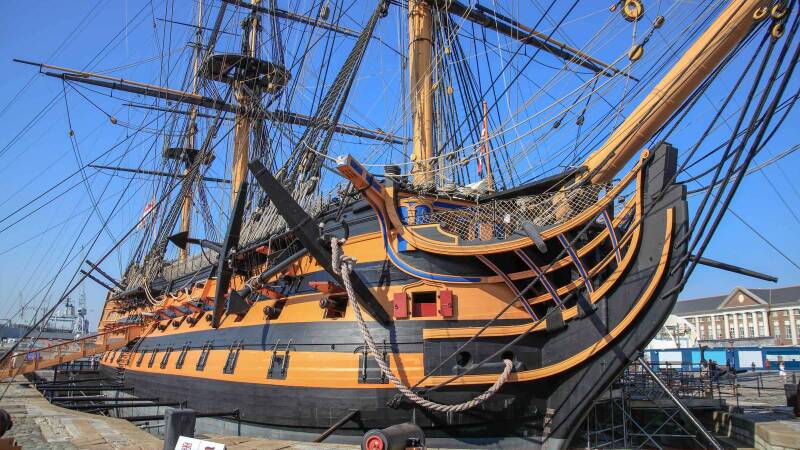
During my research, I was also able to visit a living naval warship of the time that currently resides in Portsmouth, this is the infamous HMS Victory, a British ship that served during the battle of Trafalgar (1805), manned by Admiral Harratio Nelson. The ship remains one of the greatest ever built, and is in restoration. I will use its design as a great inspiration when going forward with my ideation.
Design Principles
Now that I have analysed the data collected from my research, I can now identify and list key components I must include within my ideation. These will be my core design principles.
- The ship must have a deep hull spanning the same height as the ships walls above the water
- The ship's side walls must have curvature coming outward before coming back into the hull section
- The back end of the ship should be wide, and the front should bevel inward naturally
- The ship must have a captains cabin at the back of the ship, decorated accordingly
- It must have a steering wheel at the back half of the ship
- There should be at least two staircases on the top deck
- There should be at least three gradients for the ships top decks
- There should be fencing around the perimeter of the ship
- There should be at least four cannons on the top deck
- There should be three main masts containing three sails of accurate shaping in the mid section of the ship
- There must be an elongated mast with accurate sail pattern on both the front and back of the ship
- The ships rope and rigging should run through each sail, and span from the mid section of the main masts and crows nest to the side walls
- There must be a cross hatched section at the front of the ship for ramming
- There must be at least three rows of cannons on either side of the ship
- There should be at last three heavily damaged sections of the ship, bearing scratches, cracks, and fillings
- The environment should be on the sea and feature an island in the background
Ideation
After reflecting on my work, I can declare that I have successfully completed my aim 1 objective for the project. I will now dedicate this section to my ideation phase, with help gathered from my research, (aim 2).
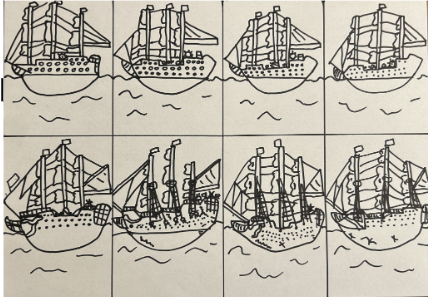
I started my ideation phase by analysing my design principles, before beginning quick ideation sketches for the ships design. I adapted the design ensuring I looked back at my research and design principles, until I was satisfied with a certain design.
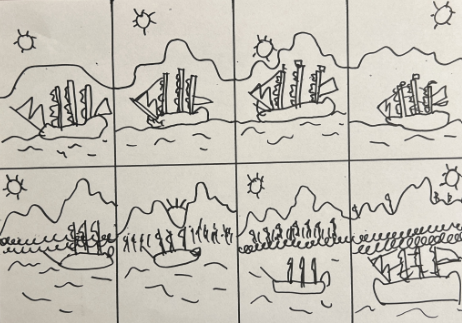
I would continue to repeat the same process for designing the diorama scene. I eventually settled on a cinematic looking design that emphasises the ship's detail.
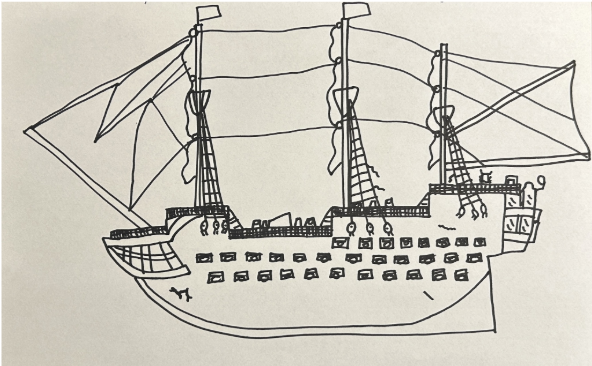
Once I had reflected on my first iterations of ideation, I then set out on creating my first prototype sketch. I used reference images of HMS Victory, as well as the information I have gathered from my research via design principles, to carefully draw up the ship's design.
Upon reflection of the design, (ensuring I referred back to my research) I was satisfied for the most part. The base shape had successfully been captured, alongside the further details I had originally listed within my design principles. I instead chose to focus on the detailing, to maximise the result of the texture process.
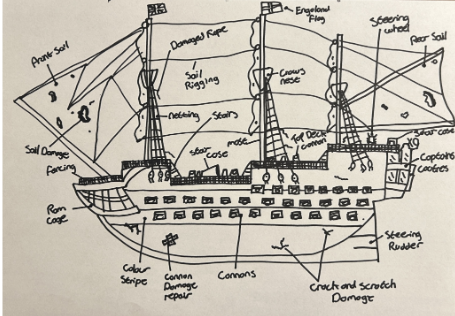
This was my final design. I took what I liked about my prototype, and added further fine details. These details included further decoration to the captains quarters for further realism, alongside the ships country flags, (which I chose to make them English) taking further inspiration from HMS Victory. I also added further war damage, such as cracks, tears, and boarded up holes, to give the best effect ensuring accuracy. I then labelled the design, in order to effectively guide me during my production stage.
Overall upon reflection of the ideation stage, I am satisfied with the result. I managed to keep to my time management goal, alongside my 2 objectives, successfully completing them. I did not come across any major creative or production challenges when completing this stage, as the task was not as technical. If I had to go back and change elements within this stage, I would concentrate more on perspective. I would sketch different angles of the design, so that I could fully visualize the ship.
Modelling Process
After completing my ideation phase along with my aim 2 objectives, I could now enter into my modeling process. This section is dedicated to the 3d modeling of the ship.
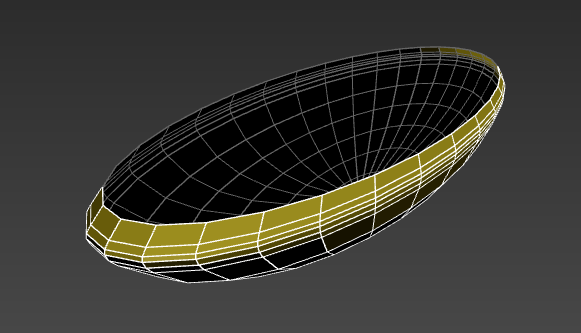
Once using my ideation for reference, I began establishing the base shape of the ship. I used a sphere shape that I extruded, before deleting the top half and adjusting the scale of the shape in order to create the hull of the ship.
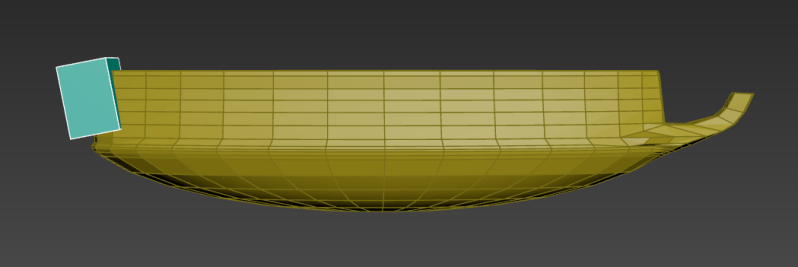
I then continued to develop the base shape further, I did this by extruding the top half upwards in sections to carefully create the wall of the ship. I then started to create the front of the ship where the ram cage would be placed, I did this by extruding the front polygons forward in accordance to my ideation plans. I also established a blockout for the captains courters, I used a cube shape that I rotated to and placed it on the rear of the ship.
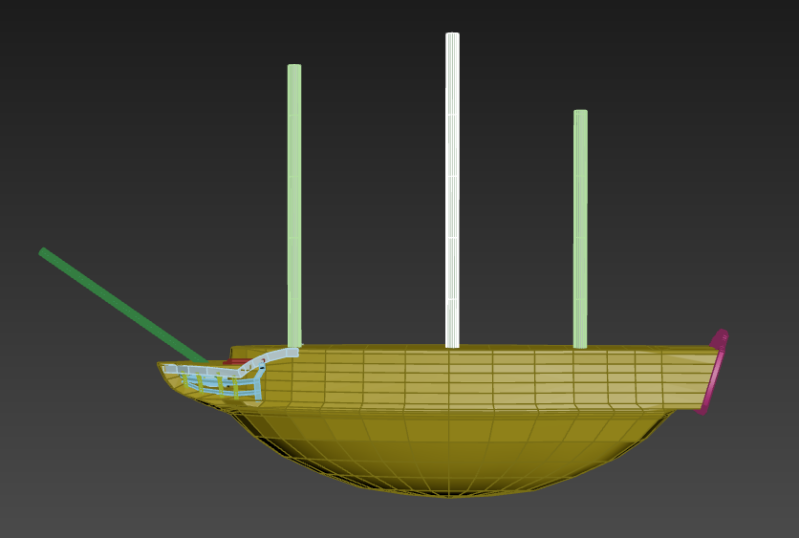
Next, I built the roll cage through box shapes I extruded and curved around the block out. I also defined the shape of the captains quarters, by adding swift loops to the rectangle, and moving the vertices appropriately. I also blocked out the sails by establishing the masts.
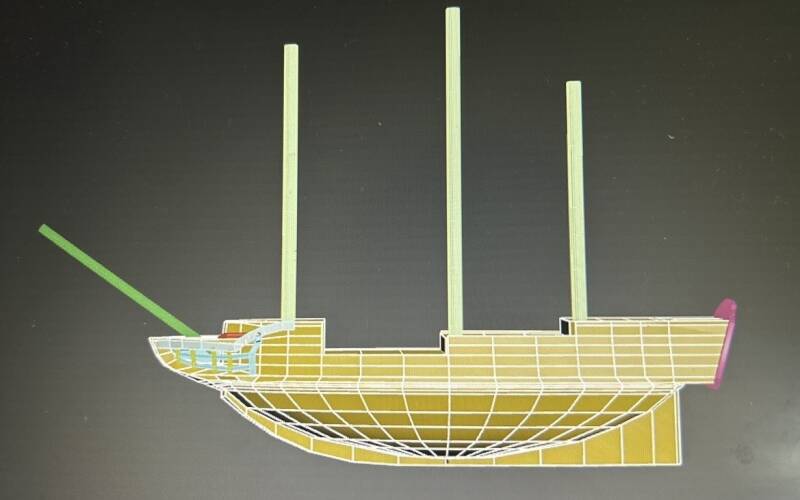
I then developed the hull of the ship, by extruding the polygons centred underneath outwards, by doing this I created the rudder of the ship. I also established the decking levels by extruding the polygons downward.
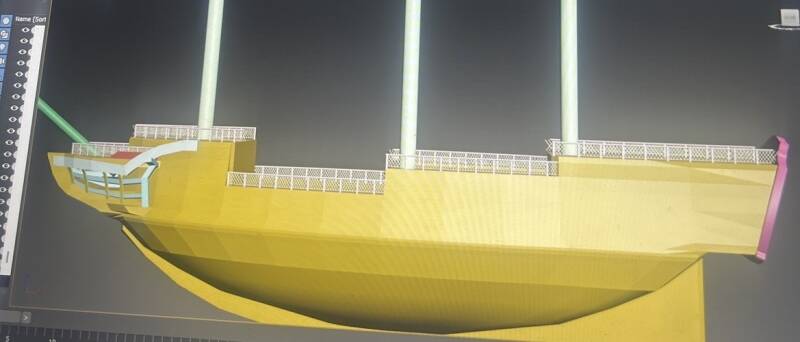
I would then add the fencing to the ship. I did this by extruding and manipulating cylinders to create a singular panel, before using the clone tool to generate multiple fences.
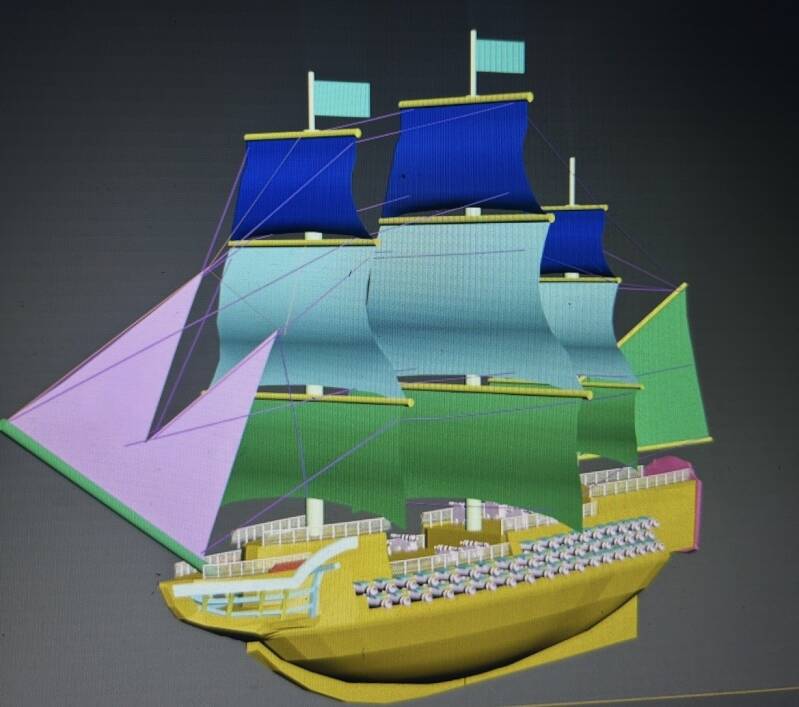
I then added the cannons by manipulating a cylinder shape and extruding it in and outwards, as well as the cannon windows using a box shape which I scaled down. I used a plane shape to create the sails, adding swift loops to manipulate the sail into the specific shape necessary before cloning it. I used a cylinder which I scaled to create the rigging, ensuring I used my ideation for accuracy.
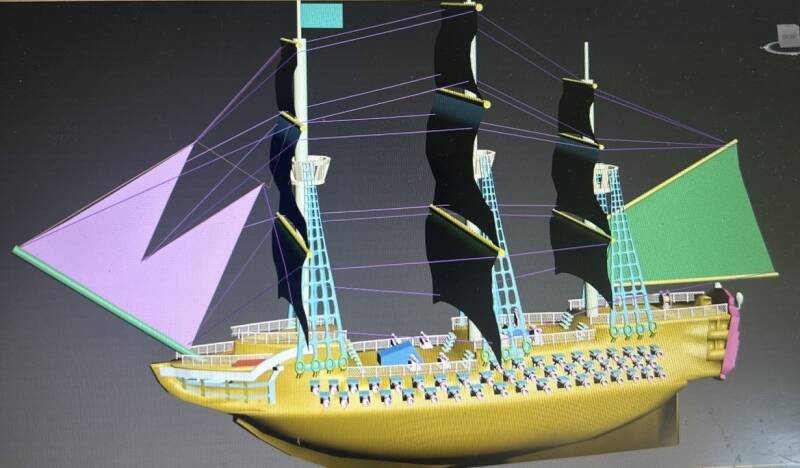
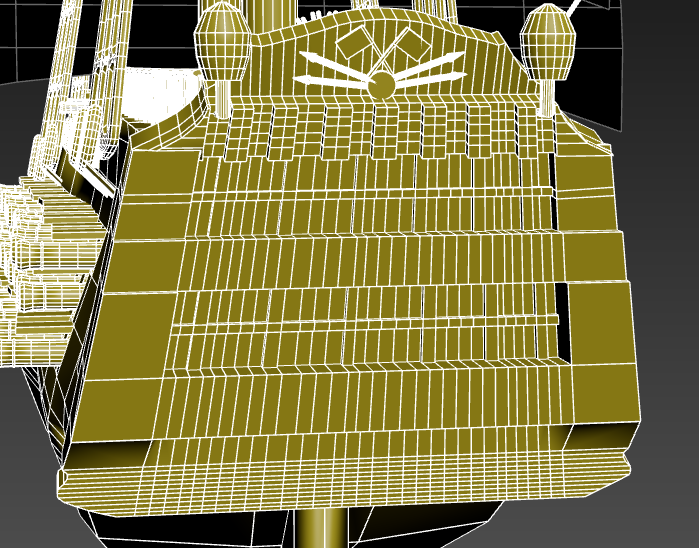
I then used a box shape which I extruded and added swift loops onto, and deleting sections ensuring I scaled the shape properly, before 3d smoothing the shape to create the netting. I would also add the finer details such as the steering wheel, staircase, crows nest, and captain's cabin decoration and windows, using the same methods, ultimately completing the model.
Overall the modelling process was successful as I once again was able to stick to my time management goal, along with my Aim 3 objectives. I encountered production challenges along the way however. The first being the base shape, when modelling the base, I did not keep to the best topology standards. As a result of this, I ended up collapsing the mesh slightly, leaving it with some notable flaws and irregularities. If I could go back and do this again, I would research more into topology checking for complex large models.
Major Production Challenge
Once concluding the modeling process, I attempted to UVW Unwrap the model. I flattened the UV’s as I usually would, my computer then froze and crashed the software, making me unable to complete the process. This would ultimately prevent me from being able to texture the ship.
Despite this challenge, I was determined to find the problem. I would dedicate the following week to researching the problem and trying to fix it. I discovered that this failed process was a result of no retapology. This was a fairly new process to me, and is something upon reflection I should have explored further earlier on in the project. I attempted to go back and retap the model, but it did not work, as I found out I needed to actively complete this process throughout the modeling process. I also made this process harder by using the clone tool instead of the array tool, adding way too many poly’s to the poly count, further worsening the problem. This challenge would unfortunately not allow me to complete Aim 4 of my objectives, which was the texturing process. Despite this, I was determined to finish the project, so I continued and dedicated the remainder of my time management to the diorama scene.
Diorama Scene
This section is dedicated to the world building and diorama scene within the Unreal Engine 4 software. This section concludes my Aim 5 objectives, as well as the project.
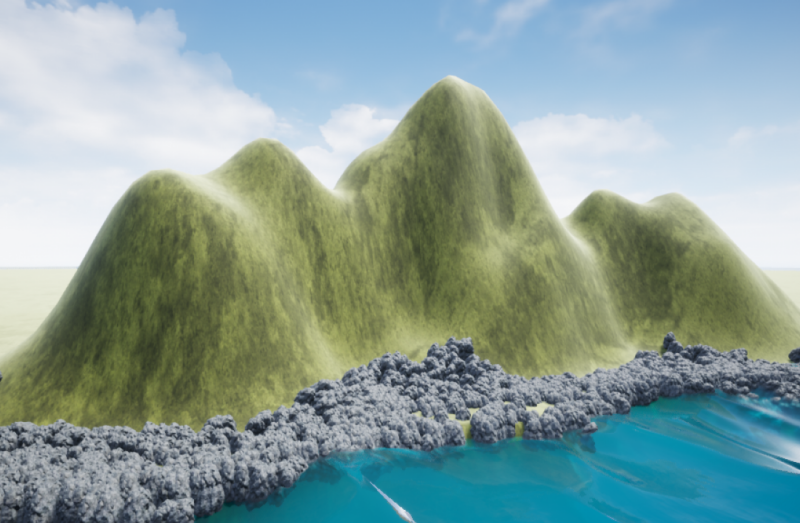
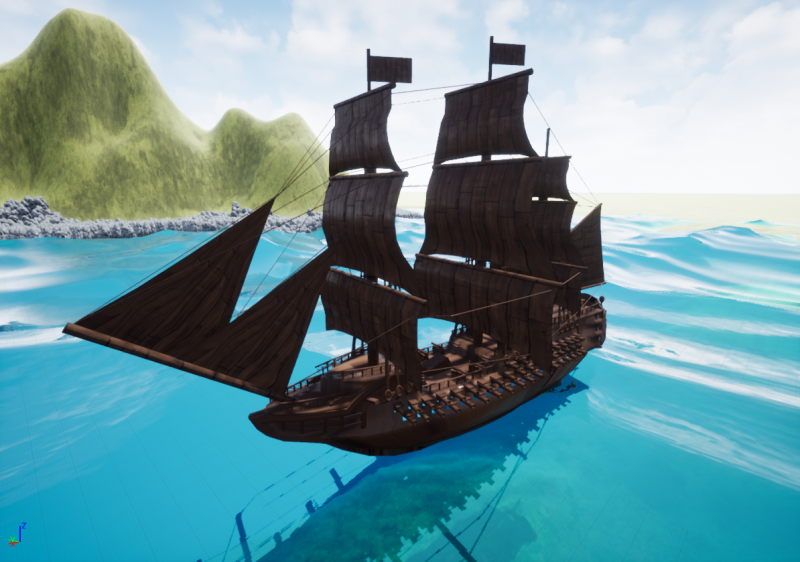
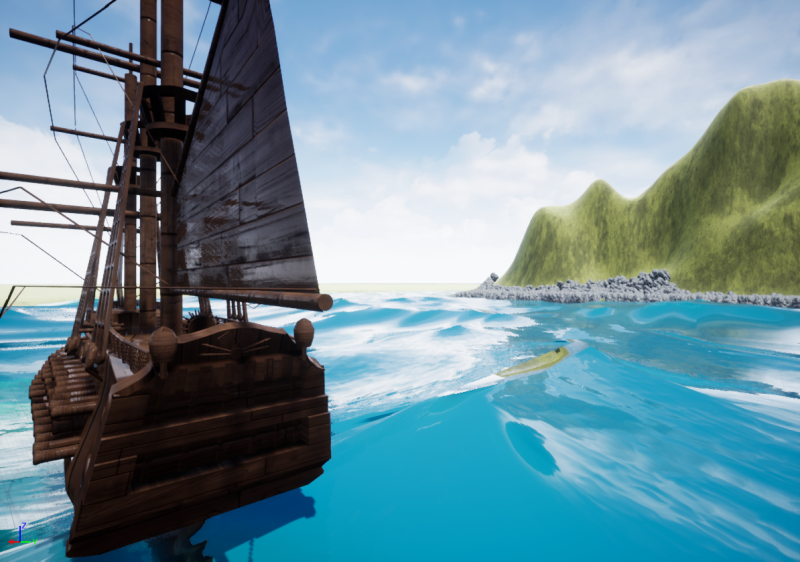
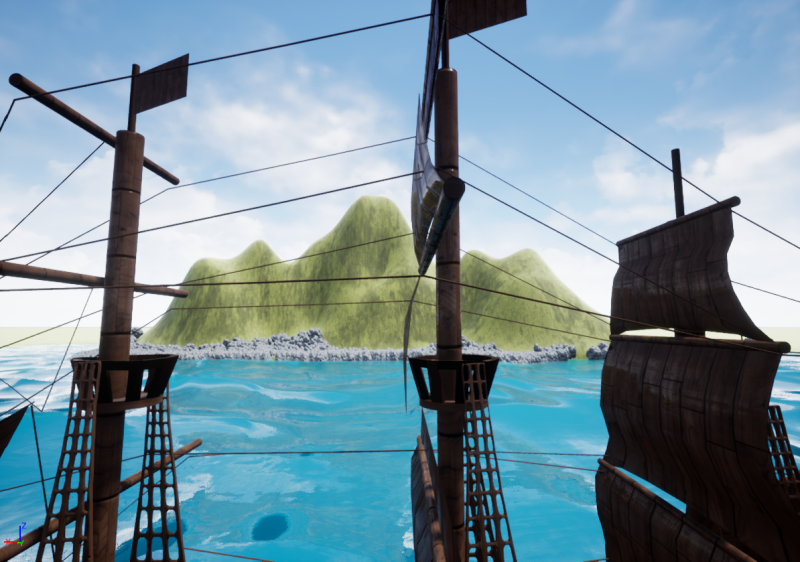
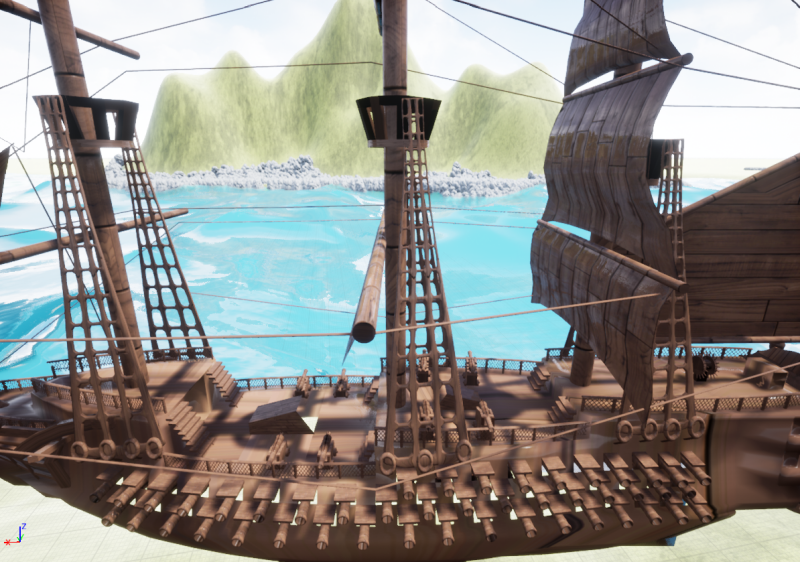
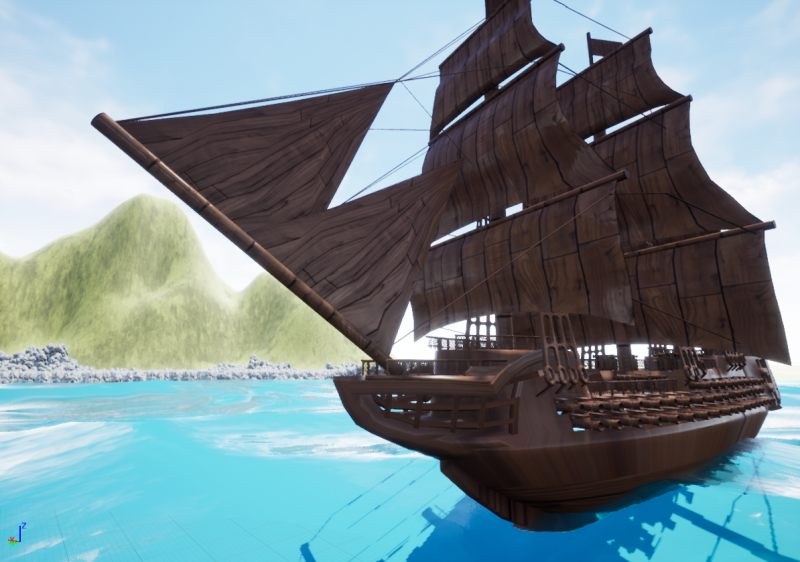
I started off by referring back to my ideation. I first blocked out the mountain shape and water by using the sculpting, and erosion tool. I would then complete the scene by adding a water plug in and experimenting with it, eventually finding the correct depth and positioning for it. I used a plug in texture for the grass mountain, and rock plug-ins, to act as an optical illusion when seen from a distance, giving the scene depth.
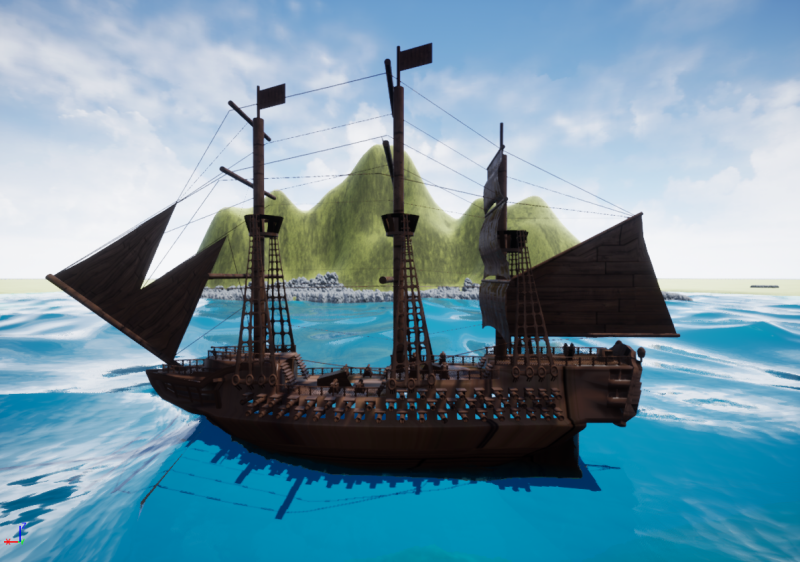
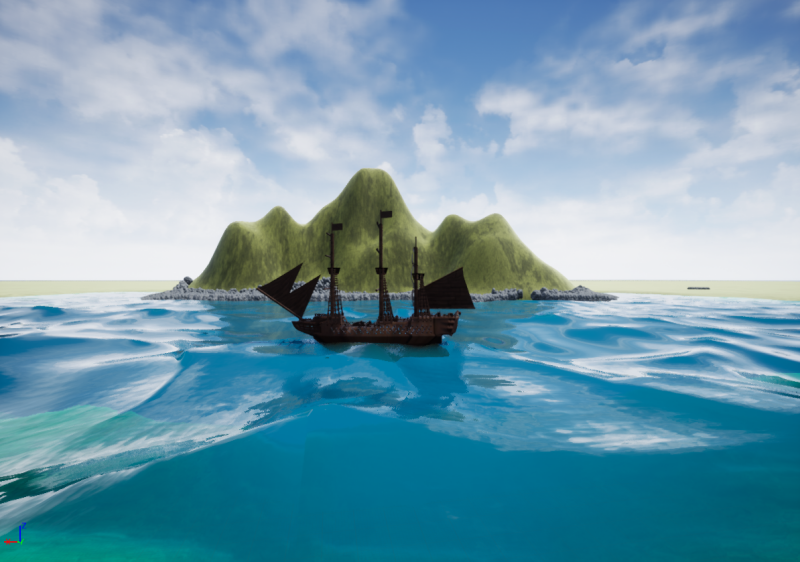
I then adjusted the ship model into the diorama according to my ideation plans, ultimately completing the project. The following images are the final renders meant especially for this website.
Conclusion
In conclusion, I am satisfied with the result of this project. I was able to complete my aims 1, 2, 3, and 5, and for the most part kept to my time management plans. I conducted successful secondary research allowing me to directly inform the design of my diorama, whilst ensuring I adhered to sustainable development goal 10. However, I am disappointed that I was unable to complete 4 of my aims and objectives. Although this production challenge altered the result of this project, it posed as a great learning curve, helping me develop my knowledge and skills further. I believe that by completing this project, I was able to challenge my problem solving skills, and develop as a 3D designer, whilst experimenting further within Unreal engine and overall world building. I was able to present a sustainable, yet challenging piece, and am grateful to conclude this document with this project in my portfolio.
Bibliography and Appendices
Appendix 1)
Chapman, F.H. af (2012) Architectura Navalis Mercatoria: The Classic of Eighteenth-Century Naval Architecture. Mineola, NY: Dover Publications. (Original work published 1768). Available at: https://books.google.com/books?id=QEPCAgAAQBAJ
Appendix 2)
Winfield, R. (2020) British Warships in the Age of Sail, 1714–1792: Design, Construction, Careers and Fates. Barnsley: Pen and Sword. Available at: https://books.google.co.uk/books?id=Y5WCAwAAQBAJ
Appendix 3)
Harding, R. (1999) Seapower and Naval Warfare, 1650–1830. London: UCL Press. Available at: https://discover.library.unt.edu/catalog/b7935552
Appendix 4)
Rodger, N.A.M. (2004) The Command of the Ocean: A Naval History of Britain, 1649–1815. London: Penguin. Available at: https://www.penguin.co.uk/books/181/181121/the-command-of-the-ocean/9780140288964.html
Appendix 5)
Allan, P.K. (2022) ‘The evolution of sails in 18th-century warships’, Naval History Magazine, 36(1), February. Available at: https://www.usni.org/magazines/naval-history-magazine/2022/february/evolution-sails-18th-century-warships
Appendix 6)
Rees, S. (2003) The Floating Brothel: The Extraordinary True Story of an Eighteenth-Century Ship and Its Cargo of Female Convicts. London: Hodder & Stoughton. Available at: https://books.google.com/books?id=7Hcp_4cryfMC
Appendix 7)
Stark, S.J. (2017) Female Tars: Women Aboard Ship in the Age of Sail. Annapolis, MD: Naval Institute Press. Available at: https://books.google.com/books/about/Female_Tars.html?id=Az01DwAAQBAJ
Appendix 8)
Stanley, J. (2017) Women and the Royal Navy: A History of the Royal Navy. London: I.B. Tauris. Available at: https://www.bloomsbury.com/uk/history-of-the-royal-navy-women-and-the-royal-navy-9781780767567/
Appendix 9)
Holihead, M. (2024) Naval Seamen’s Women in Nineteenth-Century Britain. Woodbridge: Boydell & Brewer. Available at: https://www.jstor.org/stable/jj.15684227
Appendix 10)
Plumejeaud-Perreau, C. and Pradines, B. (2024) ‘Cartographier des trajectoires maritimes incertaines du XVIIIe siècle’, arXiv. Available at: https://arxiv.org/abs/2410.13884
Major Research Project
Introduction
This is my term 2 major research project, continuing from my term 1 submission. It showcases the development of my interactive UI system for STEM students, aiming to create a complete digestive system simulation linked to United Nations sustainable development goal 4.
It also serves as a reflective piece, demonstrating my ability to manage a detailed project, including time management, research, and critical evaluation. I will reflect on challenges, achievements, limitations, and improvements, forming a final response to my term 1 question.
Time Management
I will outline my time management plan for the project. I decided on one week for modelling, three weeks for texturing, and two months for Unreal Engine world building and coding.
One week is suitable for modelling as I am confident with the process and asset complexity. Texturing is set to three weeks, with one week for research and two for production, as I want to improve my skills further.
For Unreal Engine, I allocated two months due to world building and coding. The first month focuses on world building and UI design, and the second on coding. This plan suits my skill level and keeps the project manageable, although it may change as development progresses.
Aims and Objectives
Aim 1 – Complete ideation phase with critical reflection.
Objective 1 – Use term 1 research to define key UI system components.
Objective 2 – Create a storyboard to prepare for production.
Aim 2 – Complete modelling phase with reflection.
Objective 1 – Follow ideation to recreate designs in 3D.
Aim 3 – Complete texturing phase with reflection.
Objective 1 – Apply accurate base colours following ideation.
Objective 2 – Add secondary colour using a black mask after baking and export.
Aim 4 – Complete Unreal Engine phase with reflection.
Objective 1 – Use tutorials and AI to create a skysphere, walkway, and 3D asset setup.
Objective 2 – Use tutorials and AI to create cinematics, menus, and text pop-ups.
Production and Reflection
Ideation
Here is a list of my design principles:
- Achieve at least 4 cinematics to give the simulation more of a game feel, helping keep the student engaged and making the learning experience more enjoyable.
- Include a third person player POV to add to the game-like feel while giving the player more freedom and balance throughout the simulation.
- Allow the player full control to move backwards and forwards through the simulation at their own pace.
- Ensure the 3D assets are realistic and slightly gory, as this will keep STEM students more intrigued due to their familiarity with games of a similar style.
- Make each pop-up text detailed and scientifically accurate by using the correct terminology, ensuring the simulation is educational and suitable for classroom use.
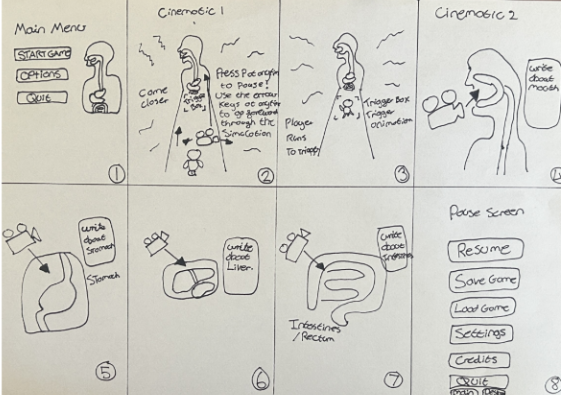
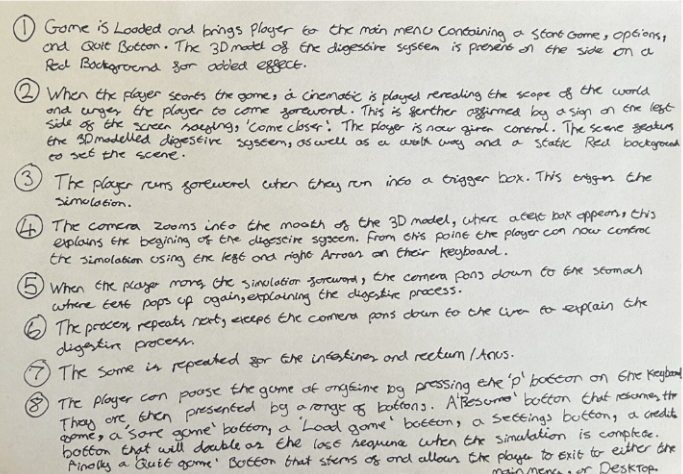
Upon reflection, I am satisfied with my ideation stage. I followed industry practice using a storyboard and applied my design principles, keeping it simple but still creative. I completed it within a week due to my existing skills, allowing me to prioritise later stages and achieve Aim 1.
However, I recognised weaknesses in my storyboard, particularly a lack of detail. If repeated, I would add colour to create a more accurate final colour palette.
Modelling Process
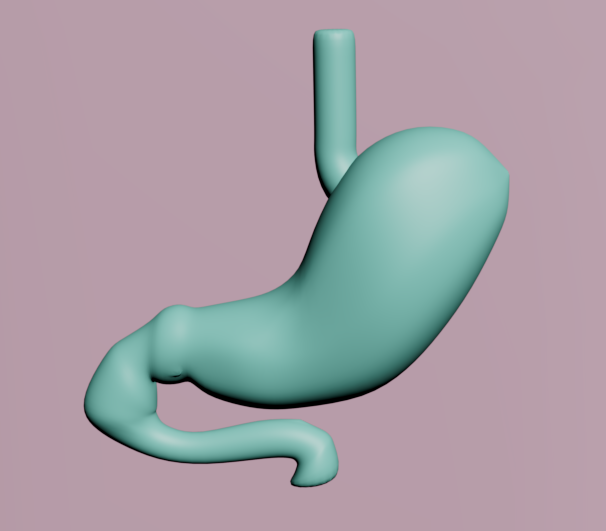
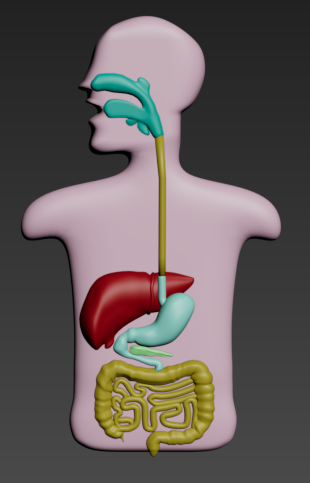
For production, I created the human torso in 3ds Max using swift loops and vertices. However, modelling the organs became a major challenge due to their complex geometry. I used image guides to trace shapes and basic forms like cones and cylinders, then adjusted vertices to refine each organ until completion.
Although difficult, the process improved my problem-solving skills. I had to extend production by a week, which affected time management, but I overcame the issue independently.
In reflection, I underestimated the complexity of modelling, which exposed skill gaps. Next time, I would assess the process more carefully to improve planning and efficiency.
Texturing Process
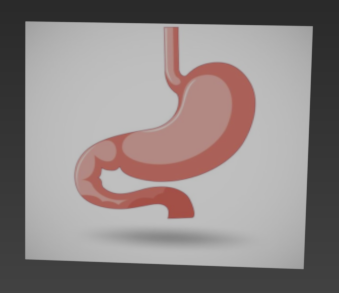
I began the texturing process by establishing accurate colours for each organ, using medical images as reference. I chose to use a human skin texture for the model, allowing me to adjust elements such as roughness, blemishes, and colour to better suit each organ.
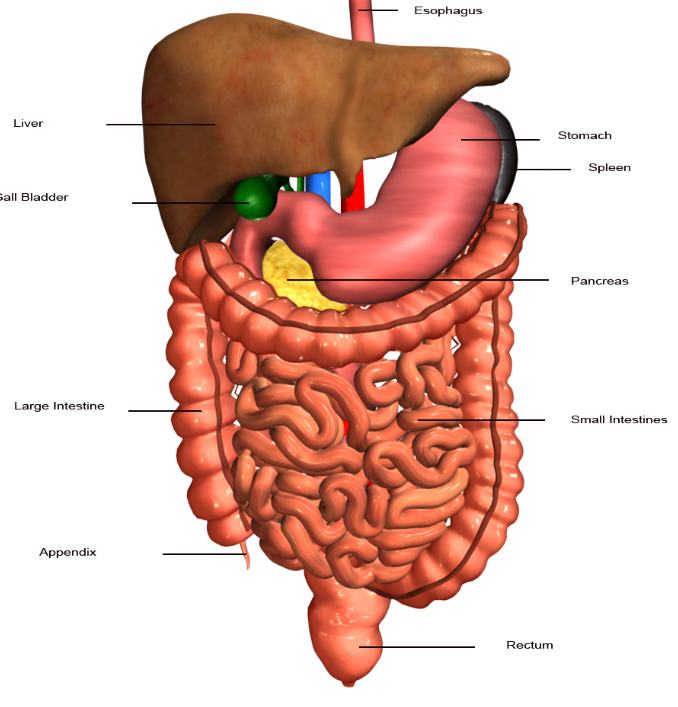
I used accurate images and diagrams such as this one above, to accurately texture my model.
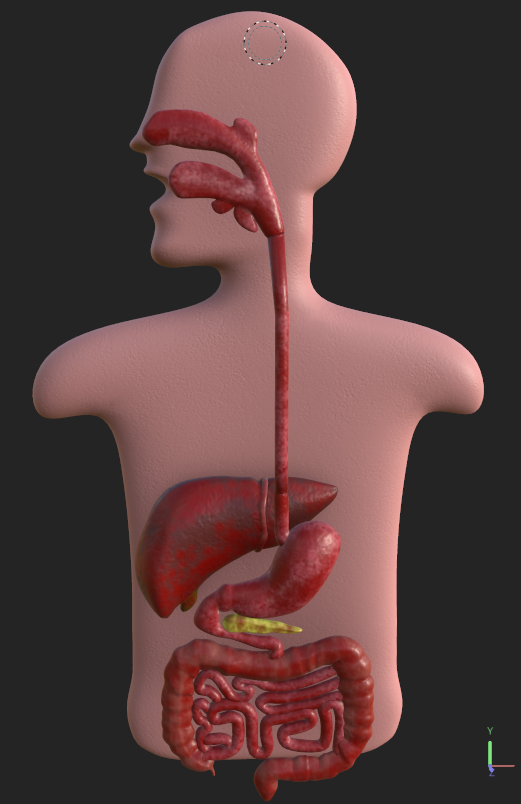
Once I established the base colours and textures, I used a black mask and polygon select tool to apply textures to specific areas of the model.
Although satisfied with the base, I added more realism for objective 2 of aim 3 using a blood splatter stencil with a red overlay, creating a more gory and engaging look for the target audience.
Overall, I am satisfied with the result and stayed within my time plan, completing aim 3. The model followed my ideation and references, though I struggled to find suitable textures in Substance 3D Painter. If repeated, I would research textures earlier to improve efficiency and realism.
Unreal Engine world building/code
I started by importing my 3D asset into Unreal Engine and applying textures using blueprints, which I completed easily due to prior experience.
I then used a level blueprint to begin world building, scaling a cube into a runway and placing the digestive system asset at the end to match my ideation. I tested the third-person character to position text instructions clearly.
I then began texturing the environment by creating a skysphere. After researching, I chose a red atmospheric texture to immerse the player and focus attention on the main asset.
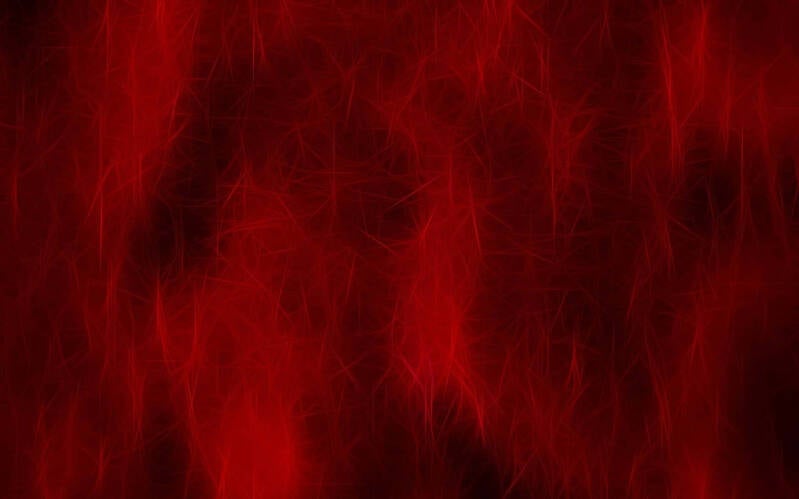
This was the image I chose for the skysphere. However, applying the texture to the scene proved difficult, creating the first production challenge of this stage.
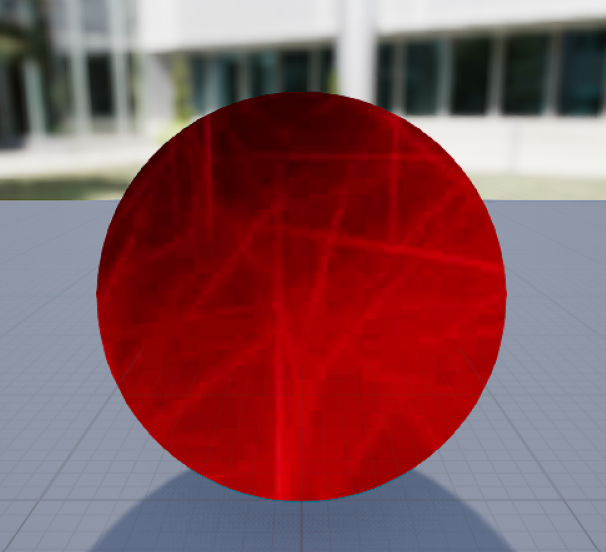
I followed a YouTube tutorial on creating a custom skysphere, which will be referenced in appendix 1. From this, I learnt how to convert the image into a HDR file so it could be used in Unreal Engine. However, after creating the sphere and applying the correct settings, I was unable to add it into the world builder due to repeated errors.
I attempted to solve the issue by creating incremental versions of the sphere, but none were successful. I then used Claude A.I, sending screenshots of my code and clearly explaining the issue. It suggested several possible causes, such as lighting and world setting errors, before finally providing a solution that worked.
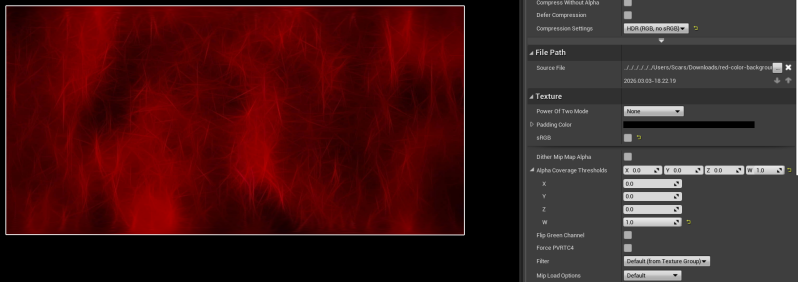
By questioning Claude, I discovered that adjusting the compression settings for both the image and scene allowed me to place the image into the cube map. This solved the issue and helped me overcome the first production challenge of the project.
Text Instructions
To create the text instructions, I experimented within Unreal Engine until I found the Actor blueprint class, which is commonly used for viewport placement. I then used the text render component to create the instructions, adjusting the scale and colour settings to suit the scene.
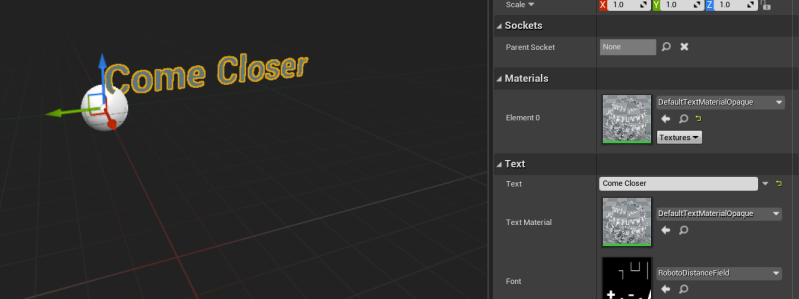
I made the text white to ensure it was visible to the player, while also adjusting the size from the player’s perspective to find the correct fit. Once satisfied, I repeated the process with two more actors to complete the instructions. Reflecting on this stage, I am satisfied with the result, as I achieved what was outlined in my ideation while also improving my confidence with the software.
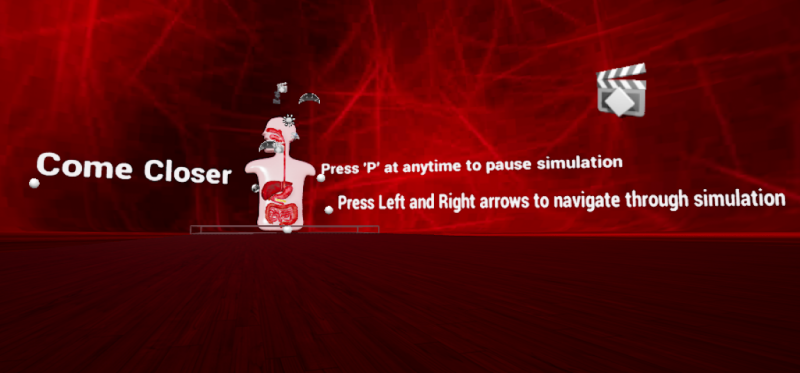
Main Menu
To create the Main Menu, I initially attempted to use my new knowledge independently. However, I quickly realised I needed guidance, as I had never created a UI before. With the help of a YouTube tutorial, referenced in appendix 3, I was able to learn the process and successfully complete the menu.
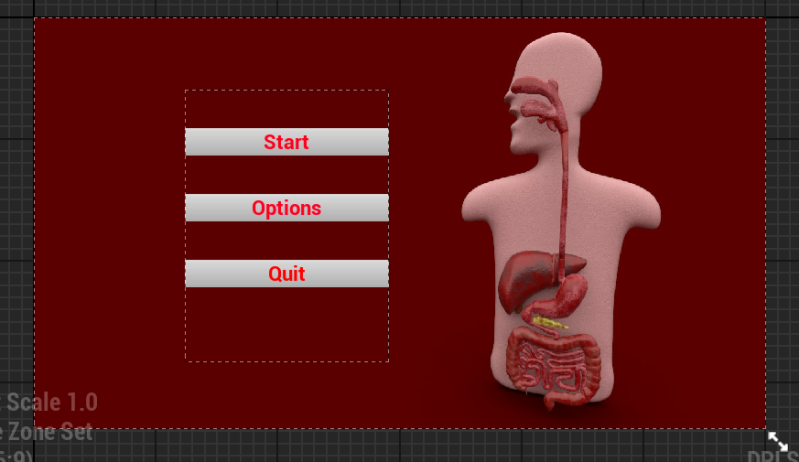
Following the tutorial, I designed a clear and easy-to-navigate main menu. I added the correct viewport components, adjusted button and text sizes, and centred them. I also used a digestive system background on a red backdrop to match my ideation and immerse the player from the start.
I then coded the menu, but faced a production issue when I couldn’t insert a specific blueprint component. I first tried fixing it using my own knowledge and custom components, before using Claude A.I, which successfully solved the problem.
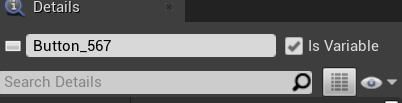
By selecting the button component and enabling “Is Variable” in the details panel, I was able to use it in code. This let me finish the stage and showed the importance of correctly labelling components, as it is easy to get lost when coding.
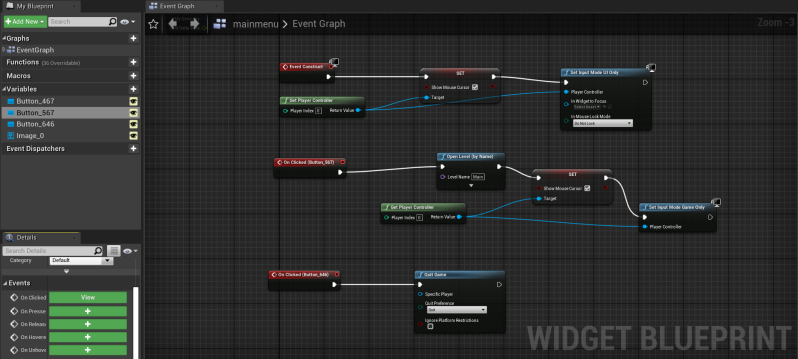
Pause Menu
I created the pause menu to work with the main menu, using my ideation and applying the same tutorial method with my new knowledge.
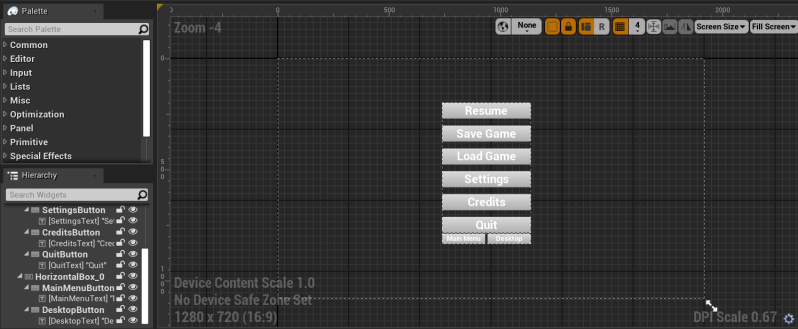
I would then begin coding. After realising I lacked the knowledge to link the pause menu to the main menu, I used a YouTube tutorial to complete it (referenced in appendix 4).
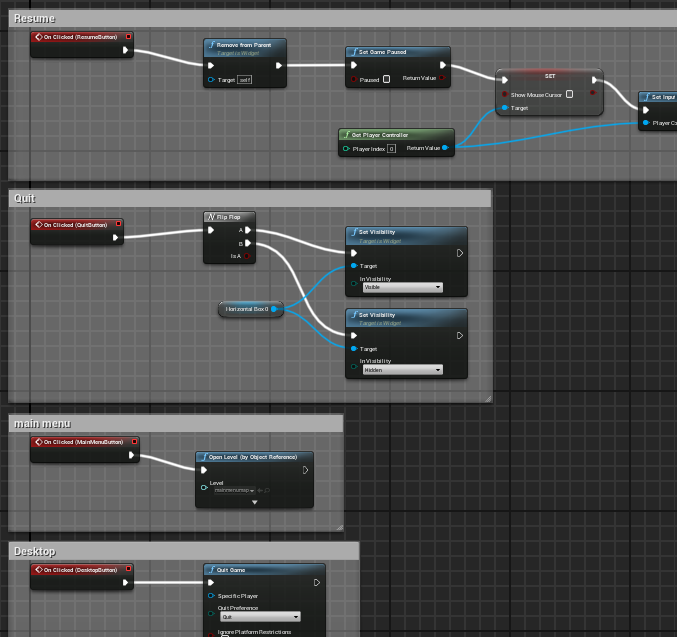
When coding with blueprints, I learned the importance of structure and labelling, as overlapping nodes made it hard to follow. After research, I found that separating and labelling components improved clarity, so I created sections for each button.
I then needed to create a command button so the pause menu could be opened by the player, which I completed using the same tutorial.
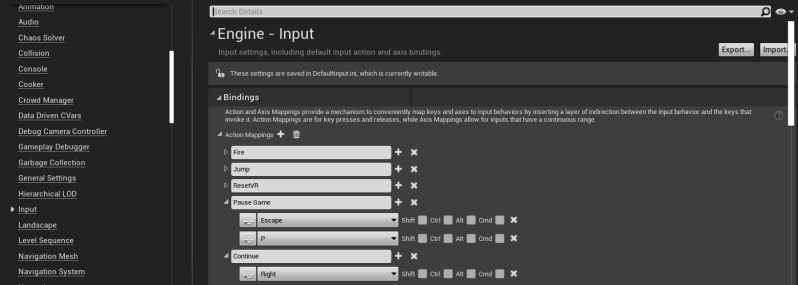

It was at this stage I discovered the input settings, which became a key tool throughout the project. By assigning a key to the function, I created controls for the pause menu using the ‘P’ and ‘Escape’ keys, matching my ideation.
I then tested the simulation and was satisfied with the result, ready to move on. During this stage I also learnt key blueprint functions such as ‘on clicked’, ‘set game’, ‘set input’, ‘get player controller’, and input settings. I had little coding experience before, so I am pleased with the skills I gained and that I stayed on track with my time management.
Cinematic
I then needed to create the cinematics, which were essential for the simulation, so it was important to complete them correctly. I used a YouTube tutorial to finish this process (referenced in appendix 5).
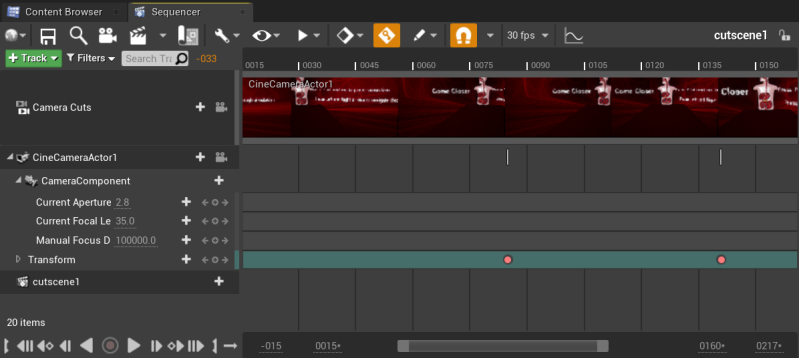
I used the cinematic camera actor to create the cinematic sequence, following my ideation. I began with the introduction cinematic, ensuring it plays when the simulation starts.
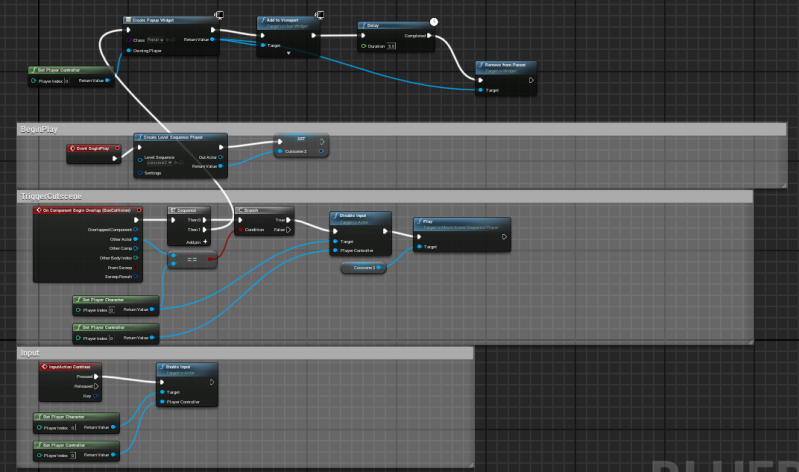
After completing and testing the opening cinematic, I needed to create the first controlled simulation cinematic. Here, the player runs to a trigger box to activate the simulation, then uses the left and right arrow keys to move backwards and forwards through it. The code above shows this process. After failing to find a suitable YouTube tutorial, I used Claude A.I, as it was better suited to my specific code needs.
Major Production Challenge
I prompted the A.I by sending images of my current engine setup with clear instructions. I first created and coded the trigger box, which was straightforward, and added the left and right arrow input controls using my existing knowledge. However, the simulation coding became the most difficult challenge so far.
With A.I help, I built the core blueprint logic, including begin play, overlap events, input functions, and get player controller. The main issue was the simulation not pausing at the end, preventing progression until the player had read the text. I tried multiple A.I suggestions, including timers and pause functions, but none worked effectively.
I then used Reddit forums (referenced in appendix 6), where I found a “pause at end” option in the cinematic playback settings, which solved the issue.
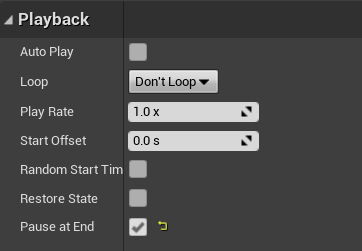
I tested the simulation again, and it only partially worked by adding a delay to the cinematic, but it did not fix the main issue.
At this stage, I reflected on the process, as I had spent weeks trying to fix this key component without success. In terms of time management, I only had one week left, so I decided to leave this issue and move on to the final part: the text pop-ups. This allowed me to complete all other components and continue developing my understanding of the system.
Text Pop Ups
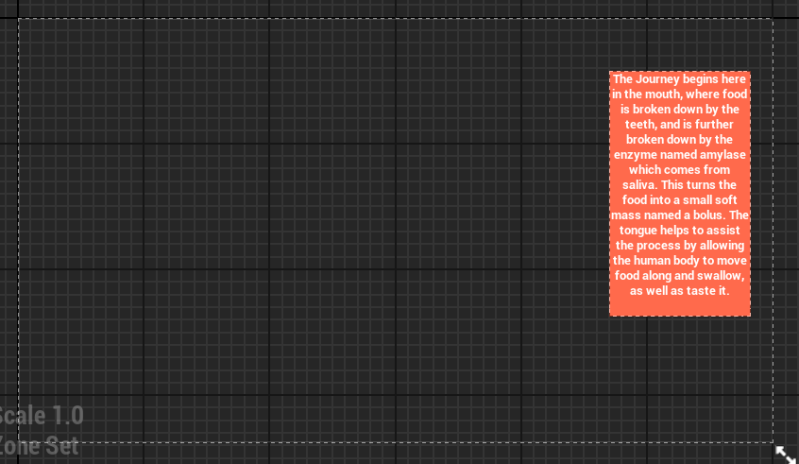
I used my knowledge to create a text box and adjust it to fit the screen during the simulation. However, I encountered a production challenge during this process.
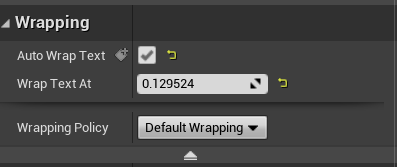
With help from Claude A.I, I fixed the issue of text not fitting the box by enabling “wrap text”, which solved the problem and completed the final result.
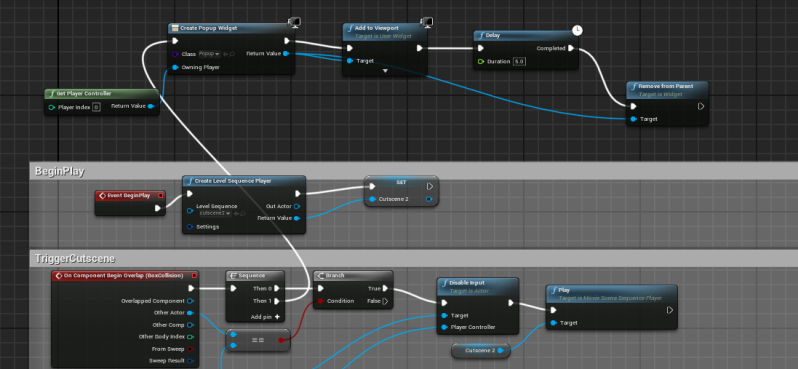
The above image shows the code used for the pop-up text. I faced another production challenge where the “on component begin overlap” node was already in use and could not be reused. I used Claude A.I to solve this and learnt that a sequence node allowed both components to branch from it, fixing the issue.
After play testing the simulation and completing most components, I concluded the project.
Conclusion
In conclusion, I am satisfied with this project and believe I achieved my aims and objectives while answering my research question by producing a digestive system simulation for STEM education. This links to sustainable development goal 4 (quality education).
I developed my Unreal Engine world building and coding skills significantly, improving a key area I initially identified as a weakness. While I did not fully complete the simulation, I gained a strong understanding of game engine fundamentals and grew in confidence as a developer. I will take this knowledge forward and continue improving my skills.
Bibliography and Appendices
Appendix 1:
YouTube (2026) YouTube video. Available at: https://www.youtube.com/watch?v=JPKFCv9VprM (Accessed: 21 May 2026).
Appendix 2:
Claude (2026) Claude AI onboarding page. Available at: https://claude.ai/onboarding (Accessed: 21 May 2026).
Appendix 3:
YouTube (2026) YouTube video. Available at: https://www.youtube.com/watch?v=RZlCqZhI9Nc (Accessed: 21 May 2026).
Appendix 4:
YouTube (2026) YouTube video. Available at: https://www.youtube.com/watch?v=Bck480UHKq8&t=988s (Accessed: 21 May 2026).
Appendix 5:
YouTube (2026) YouTube video. Available at: https://www.youtube.com/watch?v=QHIxHBLmp7w (Accessed: 21 May 2026).
Appendix 6:
Reddit (2026) Reddit homepage. Available at: https://www.reddit.com/ (Accessed: 21 May 2026).